all things 12v
Whether you're building your first 12V setup or upgrading an existing system, our information, advice, experience and product recommendations will help you create a reliable power solution for your camping, touring and off-grid adventures.
Whether you're heading away for a weekend camping trip, touring Australia in a caravan, or tackling remote off-road tracks, a well-designed 12 volt system allows you to power essential equipment without relying on mains power.
From LED lighting and portable fridges to water pumps, charging stations and communication devices, a quality 12V setup helps you stay comfortable, organised and self-sufficient.
One of the biggest advantages of modern 12 volt technology is the huge range of products now available. Today's campers can enjoy luxuries that were once only possible at powered campsites. Portable coffee machines, induction cookers, fans, entertainment systems, televisions, even air compressors and even electric blankets can all be integrated into a well-planned 12V system. With the advances in modern battery technology, solar charging and power management, staying off-grid for longer has never been easier.
The best part is that many 12 volt installations can be completed by DIY enthusiasts with basic tools, careful preparation and a good understanding of their power requirements. By selecting quality components and designing a system that suits your individual needs, you can create a reliable power solution that performs safely and efficiently for years to come.
At the heart of every great camping or touring setup is dependable power. Whether you're upgrading an existing system or starting from scratch, there are now affordable 12V products available to suit every budget, vehicle and adventure style. From batteries and solar panels to wiring accessories, lighting and power management solutions, the right equipment can make your next camping trip more comfortable, convenient and enjoyable.
So I hope you'll find this page informative and helps you explore some 12 volt products and discover how easy it is to build a practical, reliable and affordable off-grid power system for your next adventure.
Modern 12 volt systems have transformed the way people camp, travel and explore the outdoors. What was once considered a complicated setup reserved for experienced adventurers is now more accessible and affordable than ever before.
With a little planning and the right equipment, most people can build a reliable 12V setup themselves and enjoy many of the comforts of home wherever their travels take them.
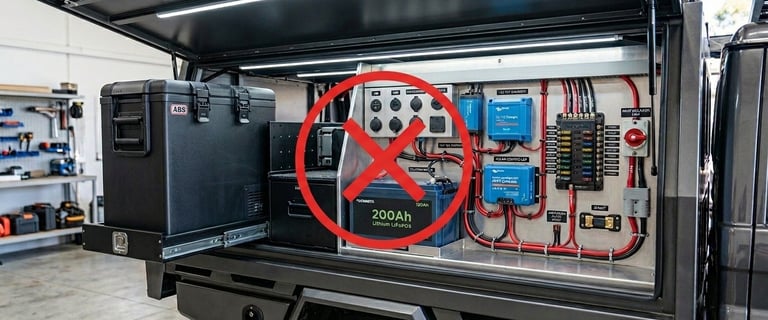
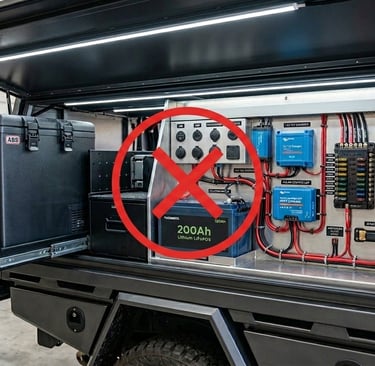
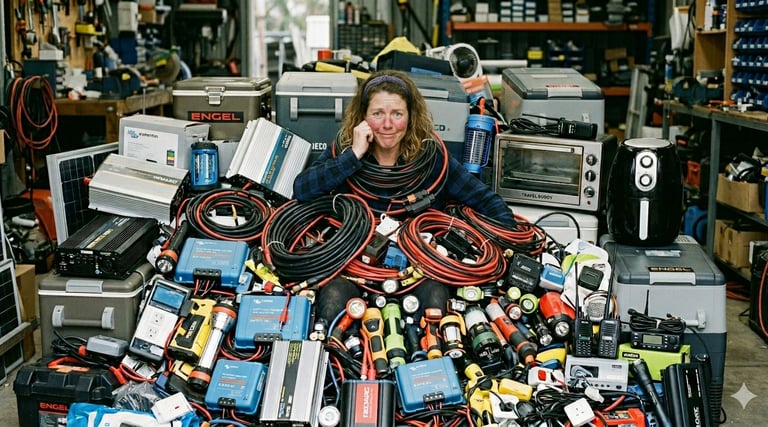
Now your 12v set up doesn't need to look like the national power grid of a small European country ...
of course, unless that's what you're into.
It can be as complicated as you like or as simple as you need ... so long as it works and is reliable.
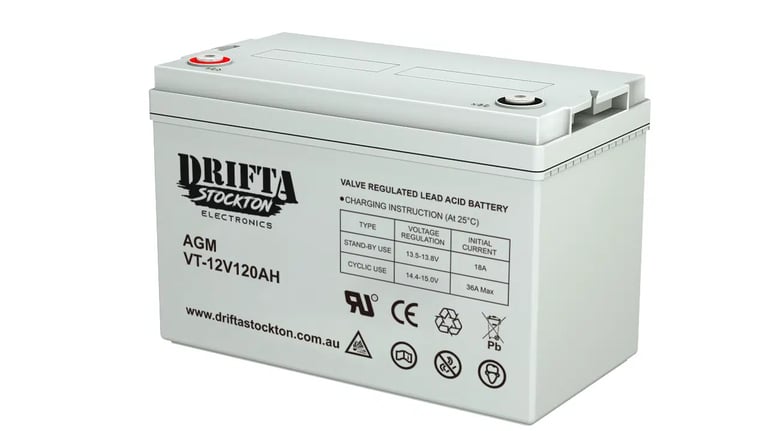
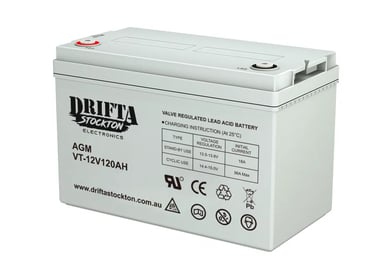
12v AGM batteries for all occasions ...
AGM batteries ( absorbent glass mat ) are a tried and tested technology that is still powering many 12v systems today, mine included. It has been specially developed to provide reliable and long lasting deep cycle 12v power that is affordable and very reliable. No BMS to worry about, they just get the job done.
AGM are great for powering your camping or living on the road items such as fridges, lights, battery chargers and so much more.
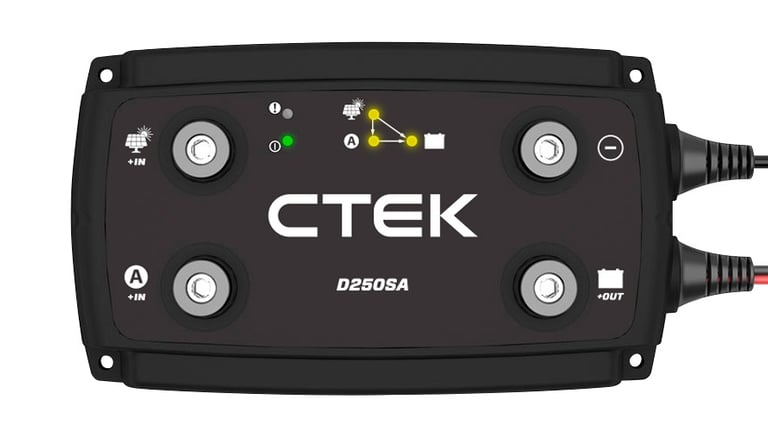
DC / DC chargers ...
A 12V DC to DC battery charger is one of the best upgrades you can make to a camping or touring setup. It efficiently charges your auxiliary battery while driving, or with solar when parked up, and ensures it receives the correct charging voltage regardless of your vehicle's alternator type.
Many modern DC to DC chargers also include solar input, allowing you to top up your batteries from solar panels when you're parked up at camp.
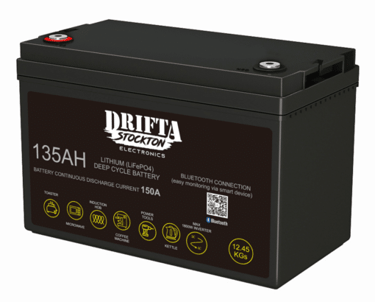
12v Lithium batteries for camping & touring ...
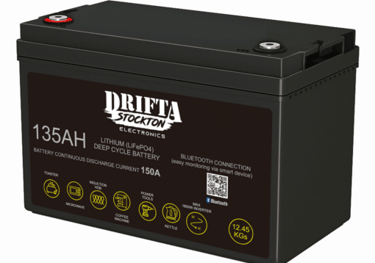
12V lithium batteries have become the go-to power solution for modern campers, tourers and off-road adventurers. Compared to traditional AGM batteries, lithium batteries are significantly lighter, charge much faster, provide more usable capacity and maintain a consistent voltage output, making them ideal for powering fridges, lights, inverters and camping accessories. However they are more expensive to buy or to upgrade to as they often require a dedicated lithium charger also.
One of the most important things of all, with any 12v system is fuse, fuse, and then fuse some more !
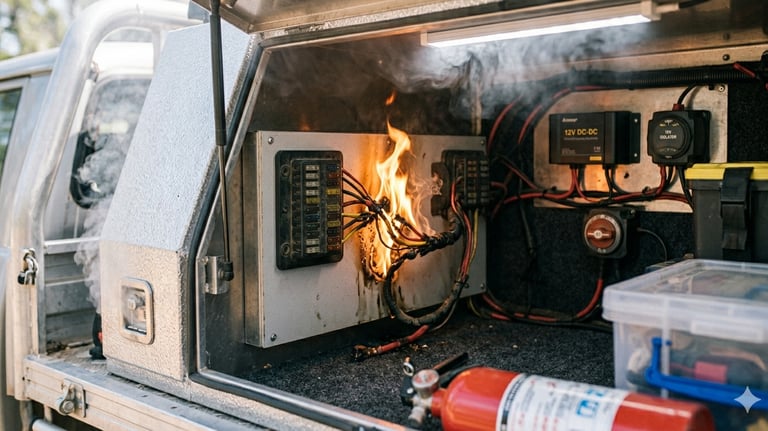
I cannot stress enough how critical fuses are to any 12V system. The last thing you want is to be out on a relaxing trip, sitting around the campfire in the middle of nowhere, only to have an electrical fire start in your vehicle. It is a heart-stopping scenario that no one wants to experience.
Proper fusing is the most essential safety measure in your build. It protects your vehicle’s wiring by breaking the circuit if an overload or short occurs, preventing wires from overheating and igniting. Imagine when you're sound asleep up in your roof top tent and there's suddenly a fire in your vehicle below ... Always fuse every 12V cable at the power source, including solar panels too, will ensure your gear remains safe and your adventure continues uninterrupted.
Protect Your Wiring - Protect Your Vehicle ...
Using the correct size wiring and fuses is critical in any 12V camping or touring setup. Undersized cable can cause excessive voltage drop, poor accessory performance and unwanted heat build-up, while oversized fuses may fail to protect the wiring in the event of a fault.
A common misconception is that fuses protect your accessories. In reality, fuses are designed to protect the wiring from overheating and potentially causing a fire if a short circuit occurs. Always choose cable that can comfortably handle the expected current draw and fit a fuse rated to protect that cable.
How Much 12V Gear is too much Gear ...
The range of 12V camping and touring accessories available today is bigger than ever. From fridges, lighting and air compressors to coffee machines, fans, ovens and entertainment systems, there’s no shortage of gadgets designed to make life at camp more comfortable.
While many of these accessories are great, it's important to remember that you don't need to buy everything. Before purchasing a new item, consider how often you'll actually use it and where you'll store it when it's not in use. Every accessory takes up valuable space, adds weight and increases the demand on your electrical system.
Do You Really Need a 12V Inverter ?
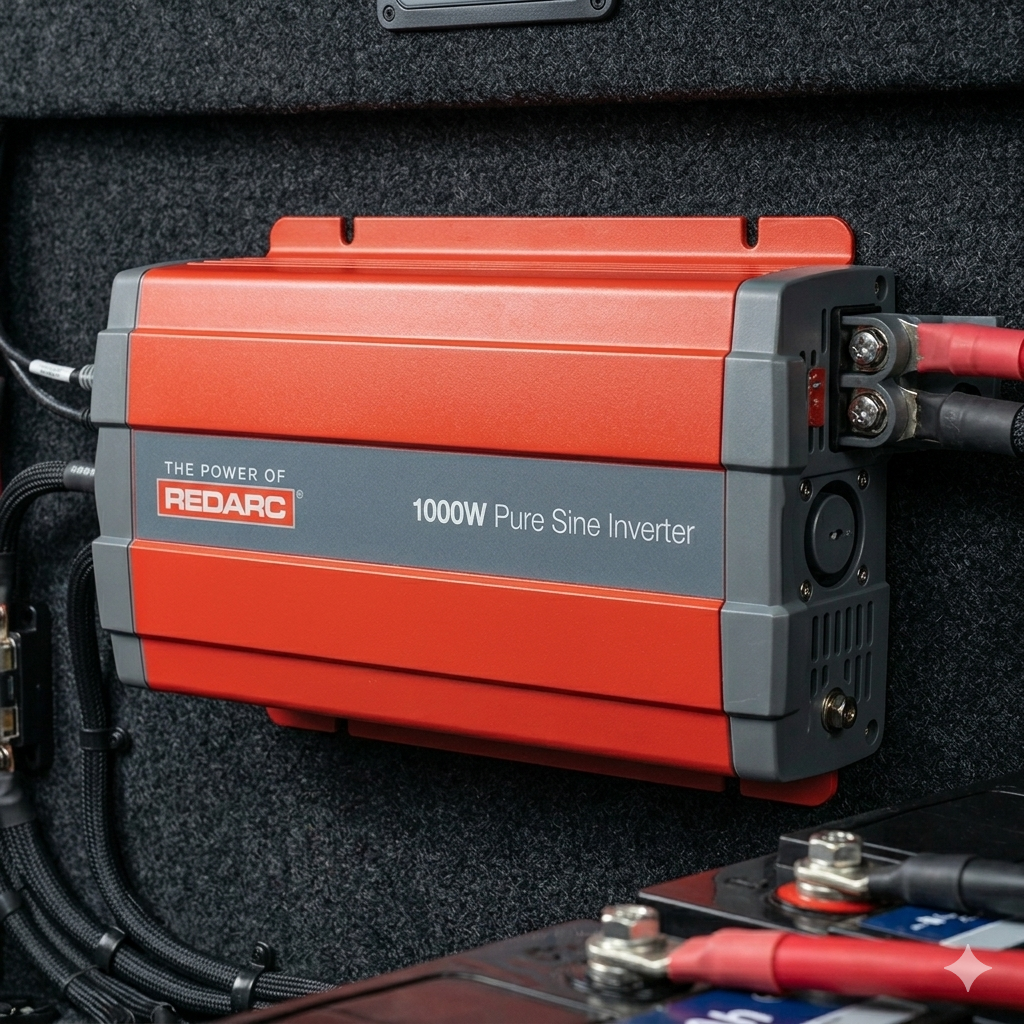
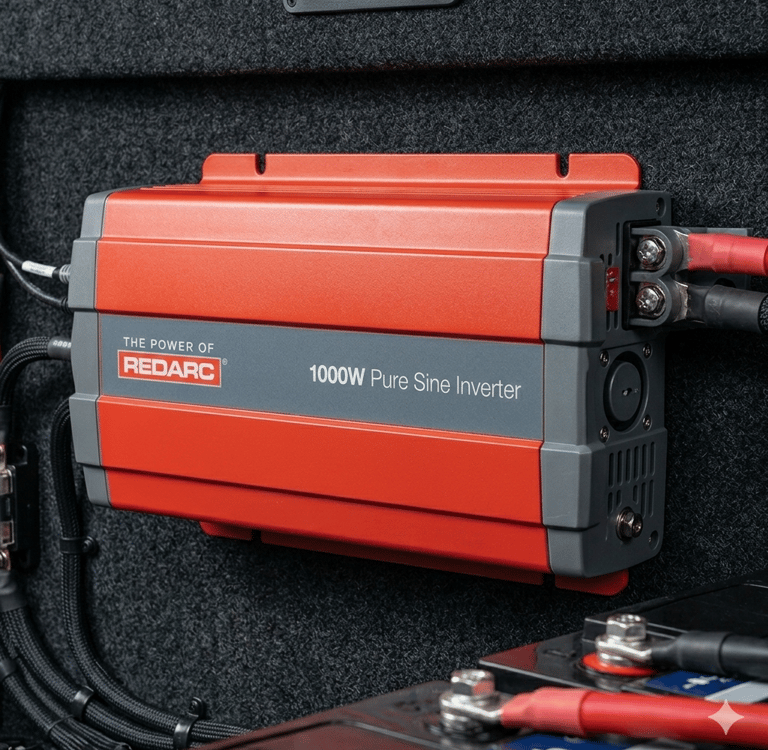
An inverter converts 12V battery power into 240V power, allowing you to run household appliances such as coffee machines, laptops, battery chargers and other small electrical devices while camping.
If you're only powering essentials like a fridge, lights, water pump and USB devices, you may not need an inverter at all. Most camping equipment is designed to run directly from a 12V system, making it more efficient and reducing battery consumption.
If wanting the convenience of 240V power while camping, an inverter can be a great addition. Make sure you choose one that suits the appliances you plan to use and the capacity of your battery system.
Solar Regulators – Get More From Your Solar ...
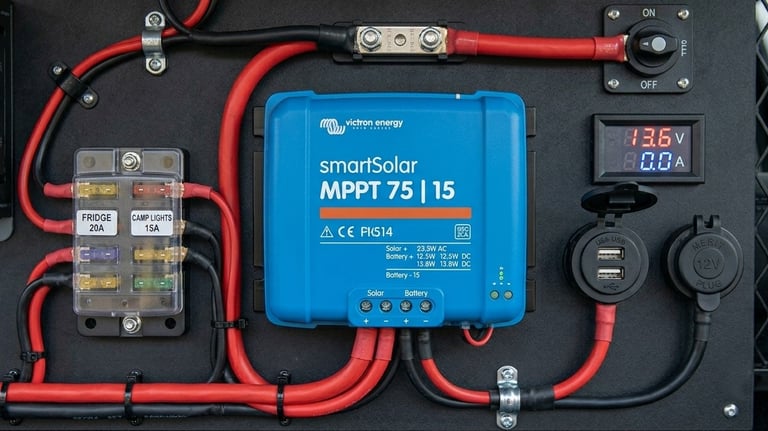
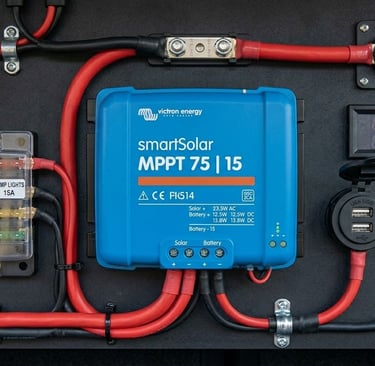
An MPPT (Maximum Power Point Tracking) solar regulator helps maximise the amount of power harvested from your solar panels and safely charges your battery. By constantly adjusting to changing sunlight conditions, an MPPT regulator can deliver more charging efficiency than a basic PWM regulator, especially on larger solar setups.
While they typically cost more upfront, an MPPT regulator can help you get the most out of your solar panels, reduce charging times and keep your batteries healthier for longer. For most camping and touring setups, they're a worthwhile investment and one of the best upgrades you can make to your 12V system.
Smarter Charging, Longer Battery Life ...
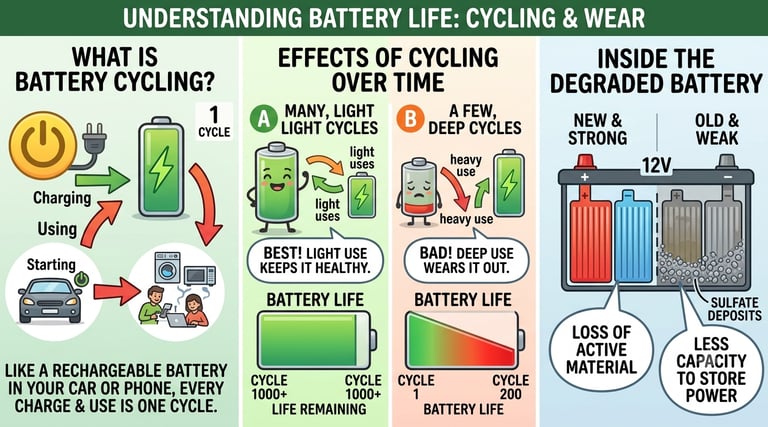
Every time a battery is discharged and recharged, it uses a % of its available "cycle life". The deeper and more frequent these discharge/recharge cycles are, the shorter the battery's overall lifespan will be. Reducing the number of full cycles can significantly extend the lifespan of your auxiliary battery, especially with lithium systems.
Where possible, recharge your accessories during the day using solar panels or charge directly from a battery bank while the sun is shining. By using available charging sources to generate power, you can reduce the load on your battery, minimise cycling, and help keep your 12V system performing reliably for years to come.
Battery Monitoring Systems - Know your Usage ...
A lot of people spend thousands on batteries, solar panels, and chargers, but don't know how much power they're actually using.
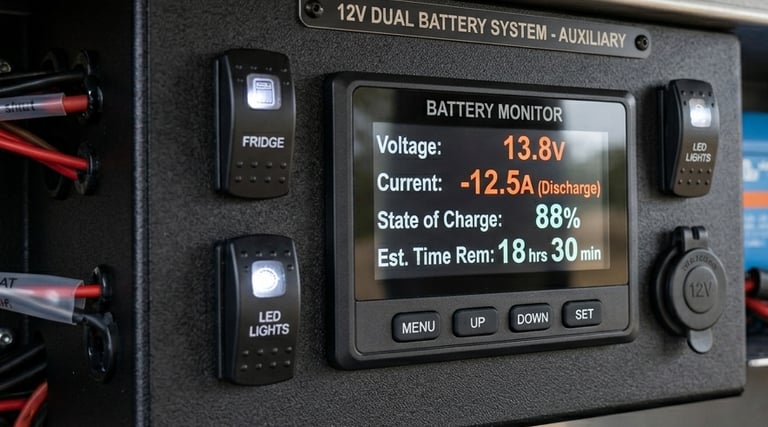
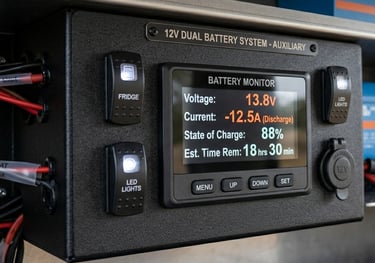
A battery monitor gives you real-time information on battery voltage, current drawing out, current coming in, state of charge, and remaining battery capacity. This helps prevent unexpected flat batteries and allows you to better manage your power consumption while camping off-grid.
Whether you're running an AGM or lithium battery, a battery monitor helps you get the most from your power system and stay off-grid for longer.
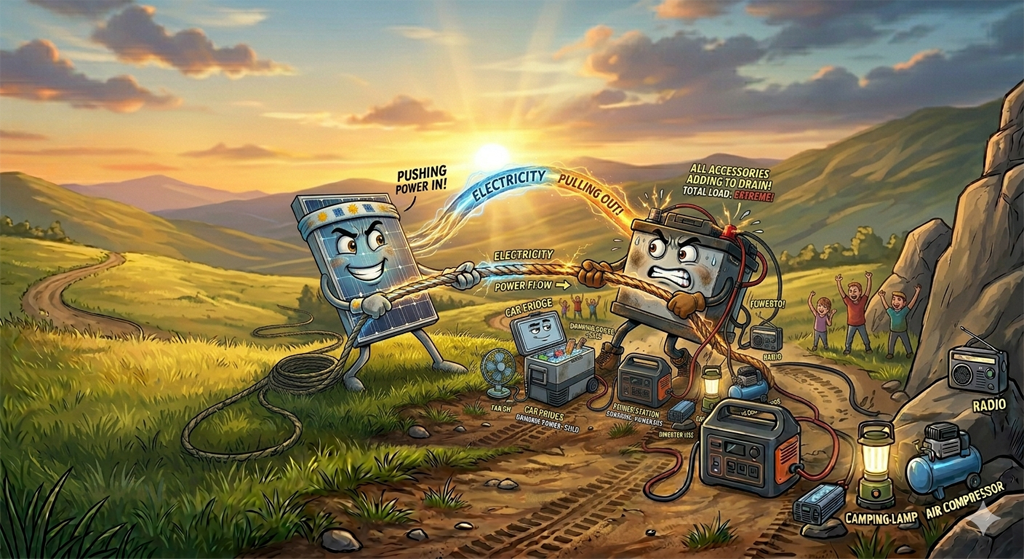
What Goes Out, Must Come Back In ...
When incorporating a solar panel, get the largest your budget and storage will allow. The larger the panel, the more amps it will put out and the quicker your battery will recharge.
Always consider a panel's efficiency too, not just the rated watts. Some cheaper, higher wattage panels can actually have less output than a smaller rated but better quality panel. It all comes down to the efficiency and how much sun is "wasted" during the conversion.
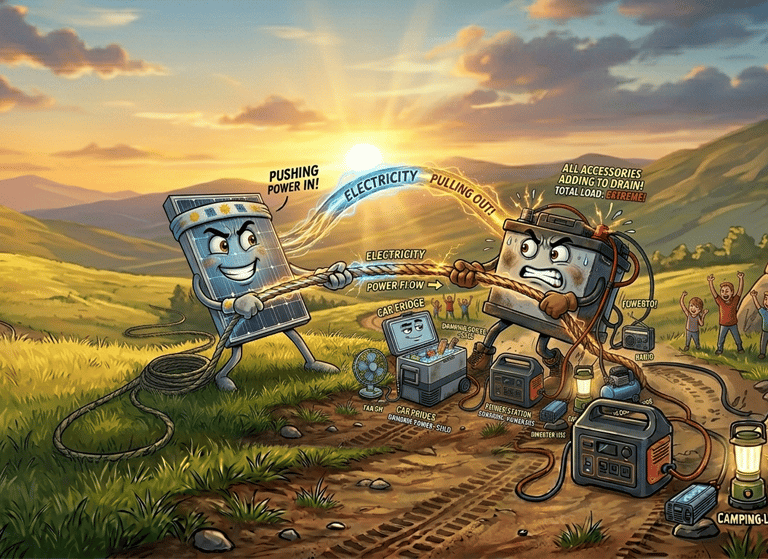
You want more amps going in to the battery than what is coming out. That way, you're powering your devices and also charging the battery back up.
What Size Battery Do I Need For Camping ? ...
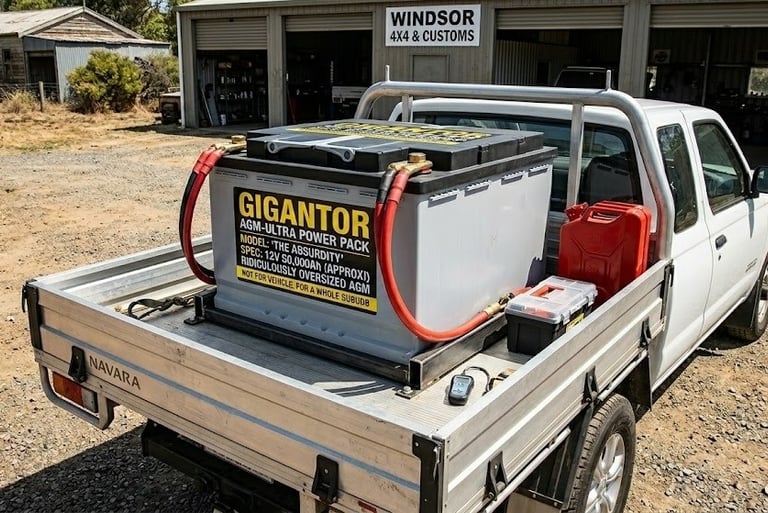
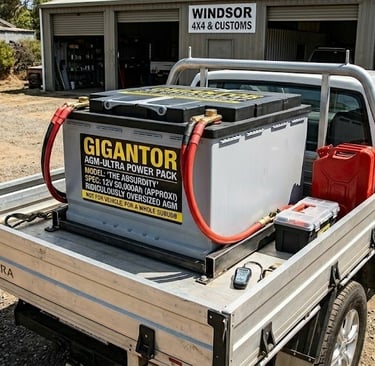
The most common question asked is "what size battery do I need ?" The answer depends entirely on how much power you'll be using each day.
Make a list of everything that will be connected to your battery, estimate how many amps each item draws, add them altogether and then once you know the total current draw of all items combined, purchase a battery that will cover that daily power consumption in amp-hours (Ah).
With AGM batteries, you have approx. 50% "reserve" or capacity and with lithium batteries, you have approx. 80% of the capacity of the battery's A/h rating.
"Because warm beer, flat batteries and melted food have ruined many camping trips already."
I remember my 1st experience with a 12v fridge years ago when I asked a fella why he "had" to have a 12v fridge ...
What's more important for camping - CCA or Ahr ? ...
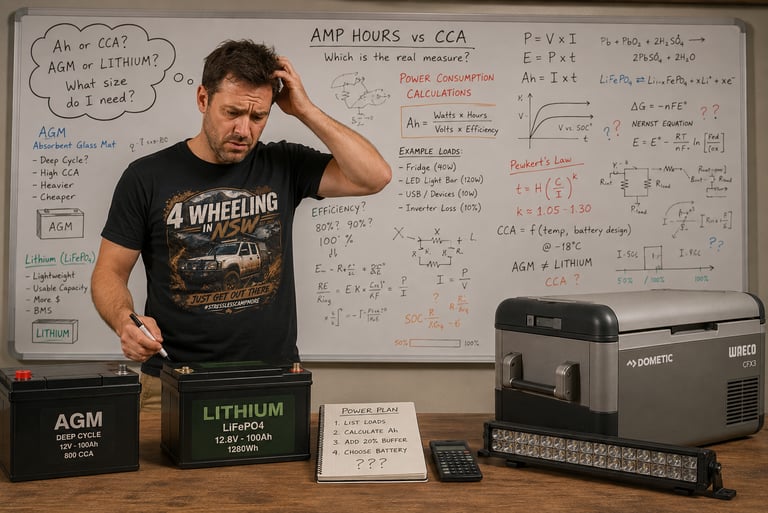
One of the most common questions people ask is: "What's the difference between CCA and Ah ?"
The answer is simple—they measure two different things.
CCA (Cold Cranking Amps) is the battery's ability to deliver a large burst of power to start an engine. Think of it like Usain Bolt—fast, powerful and over in seconds.
Ah (Amp-hours) measures how much energy a battery can supply over time. Think of it like a marathon runner—steady, reliable power for hours, making it ideal for running fridges, lights and camping accessories.
In short: CCA is for starting, Ah is for lasting.
and his answer was simply ...
OUR ADDRESS
wherever my adventure takes me
CONTACT US
WORKING HOURS
always
MENU


scan QR to SUBSCRIBE