solar panels
Harness the sun and recharge those batteries.
Understanding Solar Panels for Camping and Touring
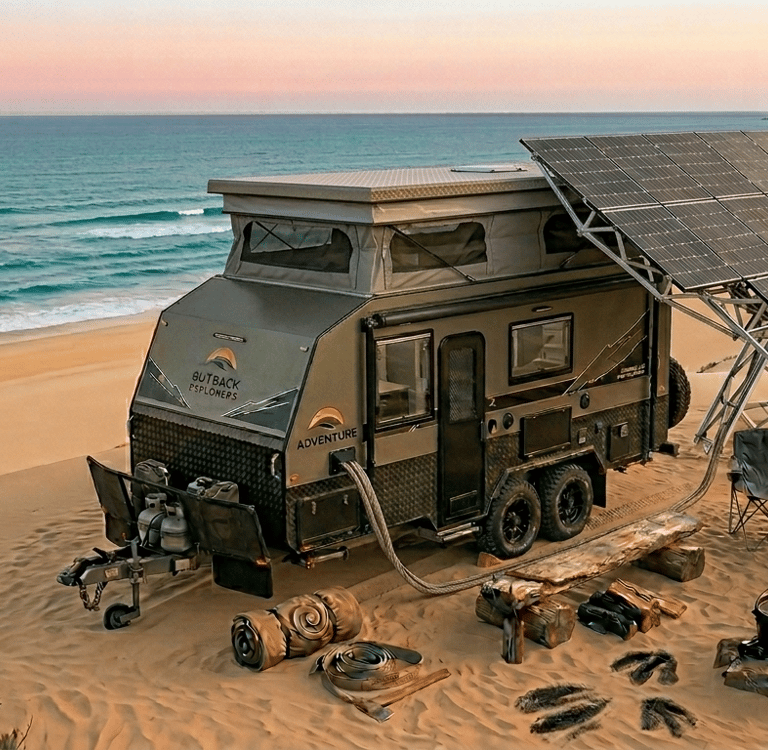
For many campers and tourers, solar power has become one of the most reliable and cost-effective ways to keep batteries charged when travelling off-grid. Whether you're running a fridge, lights, water pump, phone chargers or other 12-volt accessories, a well-designed solar setup can significantly extend the amount of time you can stay away from powered campsites.
However, understanding how solar panels work and how to choose the right equipment can save you money and prevent costly mistakes.
How big a Panel Do I need ?
Many people install an auxiliary or "house" battery to run things like camp lighting, recharge phones and tablets, even running a 12v fridge however as that battery drains down, you need a way of topping it back up otherwise your camp trip will come to a grinding halt.
If you can incorporate a solar panel and a DCDC charger, your camp trips or "off-grid" lifestyle can be extended for much longer preiods. Here I go through some of the basics of solar power to help you camp better.

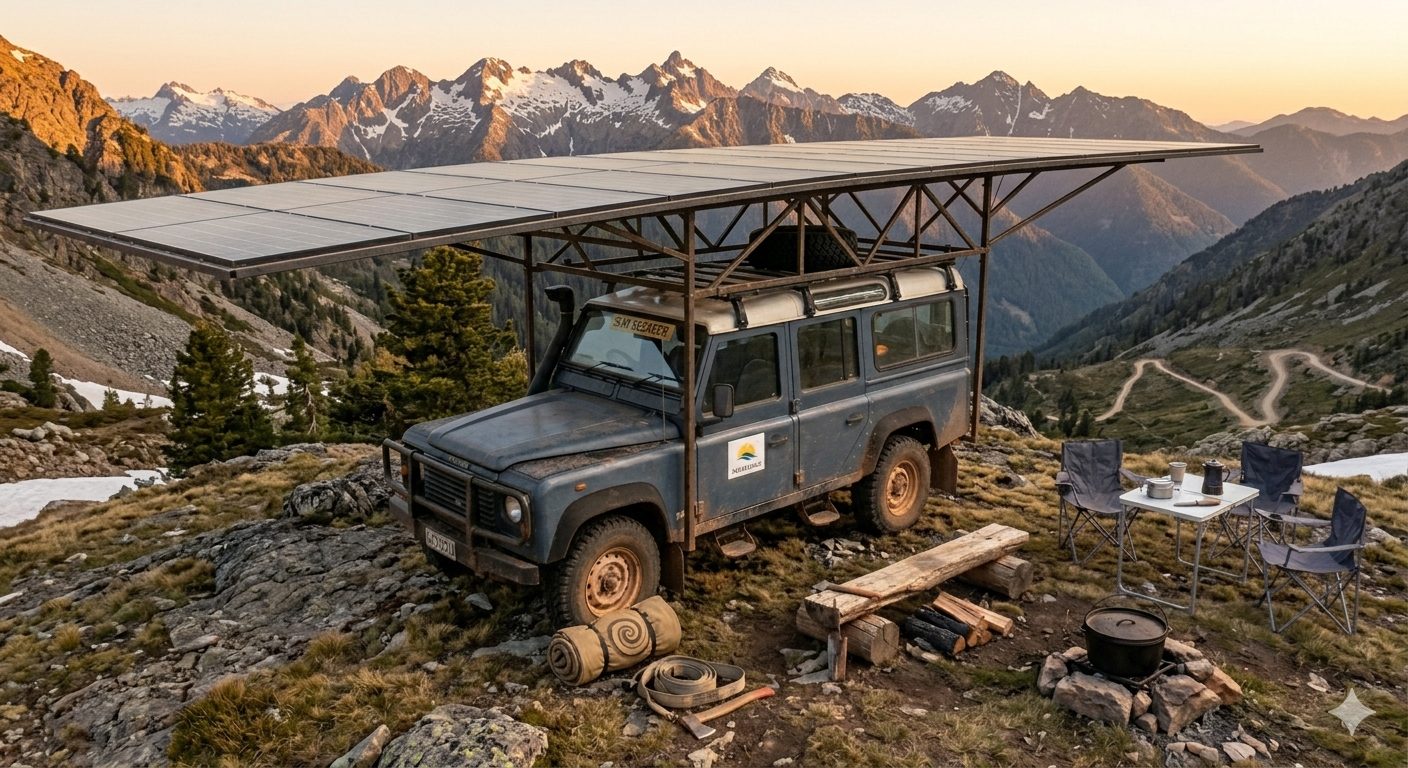
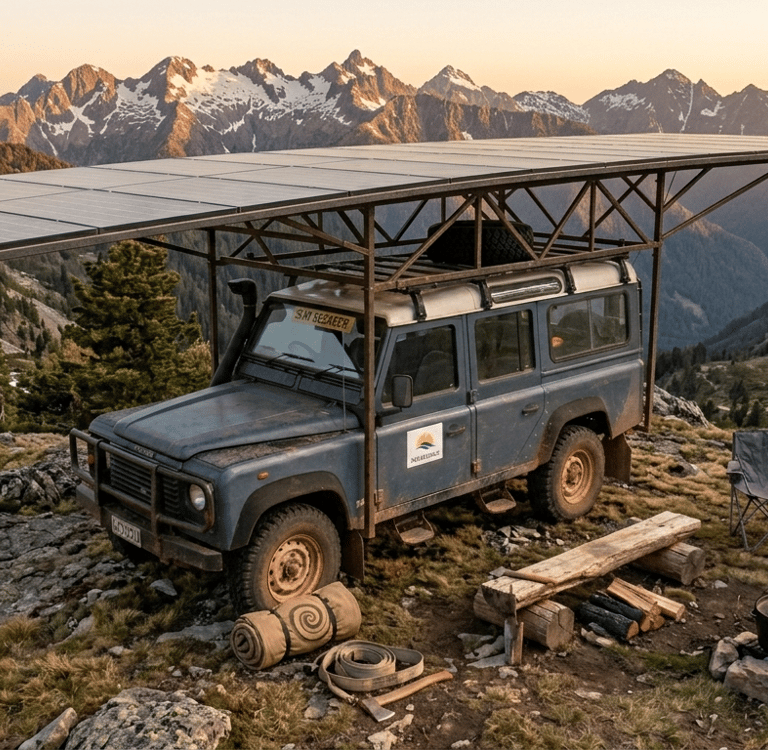
One of the most commonly asked questions would be "how big a panel do I need ?"
When choosing a solar panel for camping, the goal isn't just to power your 12V appliances while the sun is shining. Your solar panel also needs to produce enough extra power to recharge the battery so it can run those same appliances overnight and during periods of poor sunlight.
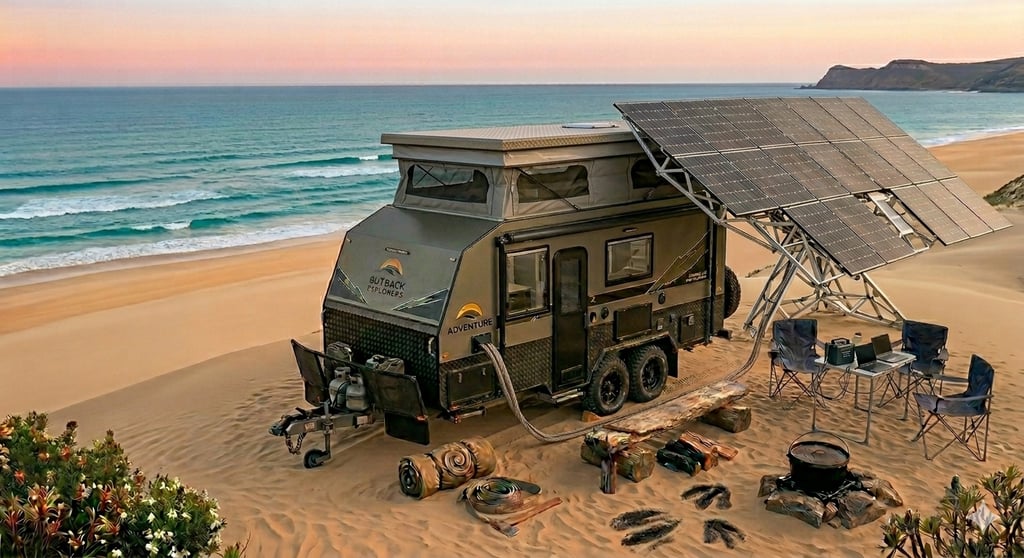
A simple way to think about it is :
Solar panel output = daytime power usage + battery recharging power
If your panel only matches the power being used by your fridge, lights, pumps, and other 12V devices, the battery won't recharge and will gradually go flat. A correctly sized solar panel provides enough surplus power to replace the energy used overnight and keep the battery topped up.
As a general rule, buy the largest solar panel that your budget, available space, and vehicle setup allow.
More solar capacity means faster battery charging, better performance in cloudy conditions, and greater ability to support additional appliances when camping off-grid. Remember though, you do need somewhere to store it if not permanently fixed to your vehicle or carvan.
How Do Solar Panels Work ?
Solar panels convert energy from the sun into electrical power. This power is then fed into your battery system through a solar regulator or a
DC-DC charger with a built-in solar regulator.
The electricity produced by the solar panel is measured in watts (W), while battery storage is generally measured in amp-hours (Ah).
In simple terms, the larger the solar panel and the better the sunlight conditions, the more power can be harvested and stored in your battery for later use.
Solar Panel Efficiency Matters
One of the biggest mistakes people make when shopping for solar panels is focusing solely on the advertised wattage.
While a panel may claim to be 400W, 500W or even 600W, the quality and efficiency of the panel are just as important as the wattage rating itself.
Solar panel efficiency refers to how effectively the panel converts sunlight into usable electrical energy. A higher efficiency panel can often outperform a larger, cheaper panel built with lower quality cells.
For example, a reputable brand using premium solar cells may produce more real-world power throughout the day than a larger no-name panel with lower efficiency and poorer manufacturing standards.
Many budget panels operate at around 20% efficiency or less, while higher quality panels can exceed this figure. When comparing products, look beyond the wattage sticker and pay close attention to efficiency ratings, build quality, warranty support and real-world performance.
A quality panel may cost more initially, but it can deliver better charging performance over many years of use.
Understanding Solar Regulators
Solar panels should never be connected directly to a battery unless specifically designed to do so through an appropriate charging system.
Most modern camping setups use either :
a dedicated solar regulator.
a DC-DC charger with an integrated solar regulator.
Wiring Solar Panels in Parallel
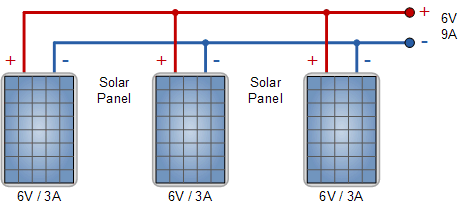
When two solar panels are wired in parallel, the positive terminals are connected together and the negative terminals are connected together.
With parallel wiring:
voltage remains the same.
current (amps) increases.
For example :
Two 12V 100W panels wired in parallel will still produce approximately 12V, but the available charging current effectively doubles.
Parallel wiring is commonly used in camping setups because it keeps panel voltage relatively low while increasing charging capacity.
Another advantage is that partial shading on one panel generally has less impact on the performance of the other panel.
Wiring Solar Panels in Series
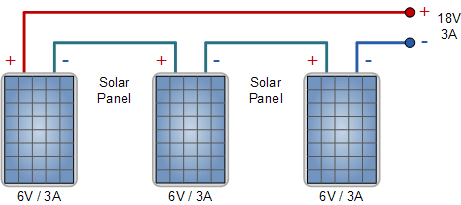
When solar panels are wired in series, the positive terminal of one panel is connected to the negative terminal of the next.
With series wiring :
voltage increases.
current remains the same.
For example :
Two 12V 100W panels wired in series may produce approximately 24V while maintaining the same current output as a single panel.
Series wiring can improve charging performance in some situations, particularly where cable runs are longer, as higher voltage generally reduces transmission losses.
However, there is an important warning that every camper should understand - see next section.
Know Your Charger's Maximum Solar Input Voltage
Many DC-DC chargers with built-in MPPT regulators have a maximum solar input voltage rating.
Exceeding this voltage can permanently damage the charger.
For example, a charger may accept a maximum solar input voltage of 32V, 45V or 50V depending on the manufacturer and model.
If two panels are connected in series and their combined open-circuit voltage exceeds the charger's maximum rating, there is a real risk of destroying the charger. Hence why fuses are crucial even on solar panels.
This is especially important because solar panels often produce a higher voltage than their advertised operating voltage, particularly in cool weather and bright sunlight.
Before connecting panels in series, always check :
the panel's open-circuit voltage (Voc).
the charger's maximum solar input voltage.
the manufacturer's installation recommendations.
Never assume that because a charger has a solar input, it can accept any combination of solar panels.
A few minutes spent checking specifications could save you hundreds of dollars in replacement equipment.
Planning for Future Upgrades
One of the most common mistakes people make when building a camping electrical system is designing it only for their current needs.
Today you may only run a fridge and a few lights, but later you might add :
larger battery capacity.
additional solar panels.
an inverter.
internet modems like "starlink".
more lighting.
water pumps.
charging stations for cameras, drones or power tools.
If you think your power requirements may grow in the future, it often makes sense to buy a larger capacity DC-DC charger from the beginning.
The price difference between charger sizes is often relatively small compared to the cost of upgrading the entire system later.
As the saying goes :
Buy right, buy once.
A charger that comfortably handles future battery and solar upgrades can save both money and installation headaches down the track.
Final Thoughts
Solar power has transformed the way we camp and tour, allowing travellers to stay off-grid for longer than ever before. However, the best solar setup is not always the one with the biggest advertised wattage.
Quality panels, high efficiency ratings, correctly sized chargers and proper installation all play a major role in real-world performance.
Understanding the difference between series and parallel wiring, respecting your charger's voltage limits and planning for future upgrades will help ensure your electrical system remains safe, reliable and capable of supporting your adventures for years to come.
A well-designed solar system means less time worrying about battery levels and more time enjoying what camping is really about — getting out there and making the most of the great outdoors.
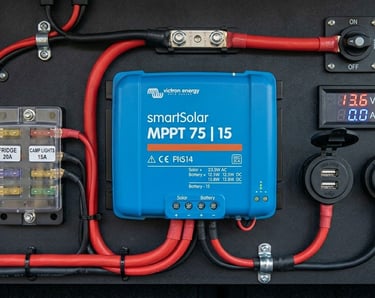
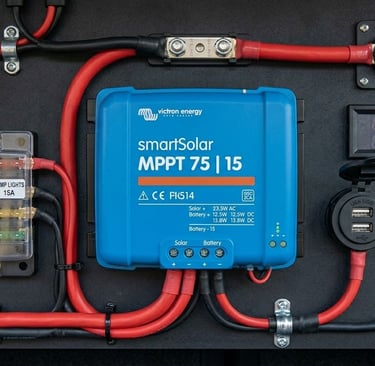
Many quality DC-DC chargers now include built-in MPPT (Maximum Power Point Tracking) solar regulation.
MPPT technology continually adjusts the charging characteristics to extract the maximum available power from the solar panel under varying sunlight conditions.
Compared to older PWM regulators, a quality MPPT regulator can significantly improve charging performance, particularly during less-than-perfect sunlight conditions.
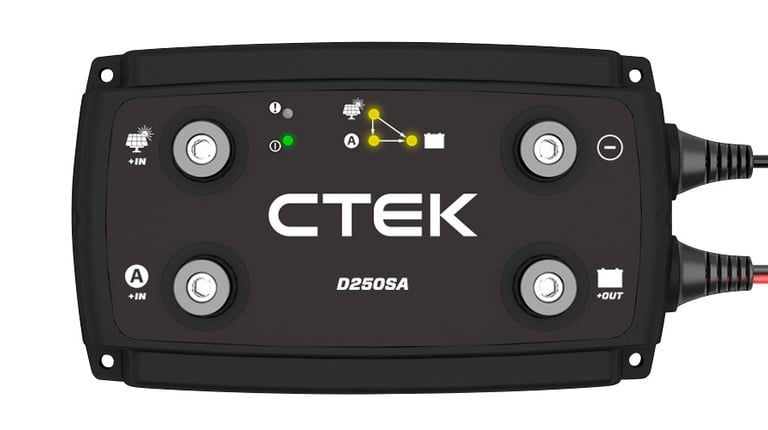
Maximise your Solar Potnetial with a DC / DC charger ...
A solar panel on it's own can charge your battery however it won't provide the same output amperage as what a DCDC charger can.
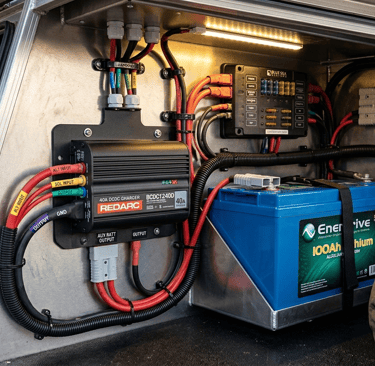
If you want to go one step further, combine your solar panel with a quality 12v DC to DC battery charger. These chargers take the output from your solar panel can effectively boost the "output" amperage from the panel into the battery.
A DCDC charger is one of the best upgrades you can make to a camping or touring setup. It efficiently charges your auxiliary battery while driving, or with solar when parked up and your engine's off, ensuring it receives the correct charging voltage regardless of your vehicle's alternator type.
Topping up your batteries from solar panels when you're parked up at camp is the best and once set up initially, it's free energy from there on.
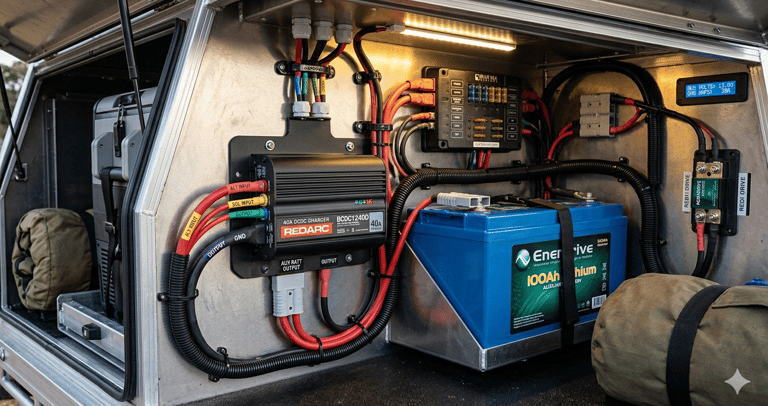
One of the most important things of all, with any 12v system is fuse, fuse, and then fuse some more !
I cannot stress enough how critical fuses are to any 12V system. The last thing you want is to be out on a relaxing trip, sitting around the campfire in the middle of nowhere, only to have an electrical fire start in your vehicle. It is a heart-stopping scenario that no one wants to experience.
Proper fusing is the most essential safety measure in your build. It protects your vehicle’s wiring by breaking the circuit if an overload or short occurs, preventing wires from overheating and igniting. Imagine when you're sound asleep up in your roof top tent and there's suddenly a fire in your vehicle below ... Always fuse every 12V cable at the power source, including solar panels too, will ensure your gear remains safe and your adventure continues uninterrupted.
OUR ADDRESS
wherever my adventure takes me
CONTACT US
WORKING HOURS
always
MENU


scan QR to SUBSCRIBE