
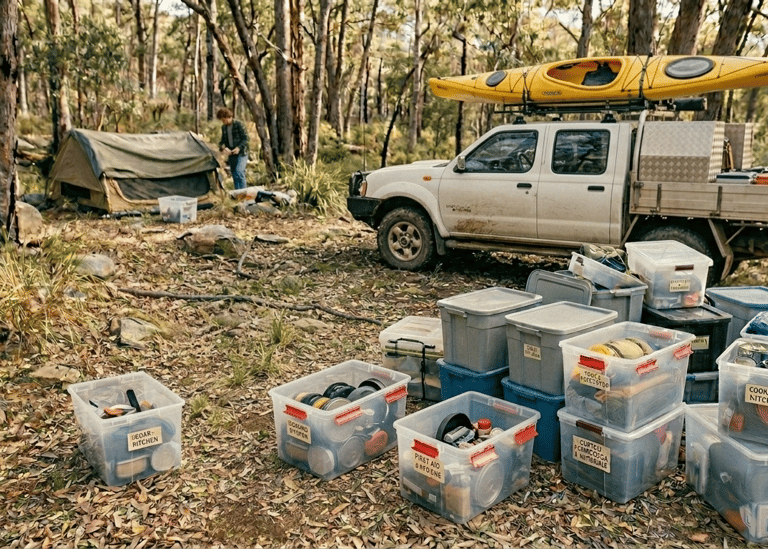
Plastic storage tubs or "totes" are an excellent storage solution at a very very affordable price. We've used these for years in previous camping set ups and they're simple, reliable and very accommodating. Most have a clip on lid which helps keep your items secure and out of the weather, great for possums etc and wet weather camping, and most stack easily on one another.
They can easily be labelled according to their contents like cooking, clothes, drinks, tent, 12v etc. That way you can quickly grab out what you need as opposed to having to rummage through one box that contains every item you take with you ... that gets very tiresome very quickly.
A simple modification to one of my storage tubs has allowed my chainsaw blade and cover to poke out from inside the box leaving plenty of room for the associated oils and jerry can to also fit in there, that way it's all ready to go in the one tub.
STORAGE
OPTIONS
Whether you're heading away for a weekend camping trip or setting off on a longer touring adventure, good storage can make a huge difference to your overall experience. Having a place for everything not only makes camp setup and pack down quicker, but it also helps prevent damage to your gear and reduces the frustration of searching for items when you need them most.
The good news is you don't need a fancy canopy or a fully decked-out touring rig to stay organised. Simple storage tubs, cargo barriers, roof bags, tie-down solutions and off the shelf pull out drawer systems can all help maximise the space you have available. The key is finding a setup that suits your vehicle, your camping style and your budget.
Finding the balance between preparation and over-packing is key. While organizing gear with drawers and bags is great, it’s easy to cross the line into "too much."
Every storage system adds tare weight, which increases fuel consumption and strains your suspension. Avoid the "just in case" trap by auditing your gear—if you didn't use it last time, leave it behind. Remember, keeping your setup lean ensures you stay under your vehicle's GVM limit.
Ultimately, be intentional: store essentials securely without turning your 4WD into a rolling warehouse.
There are some companies around that manufacture drawers for specific vehicles or custom applications.
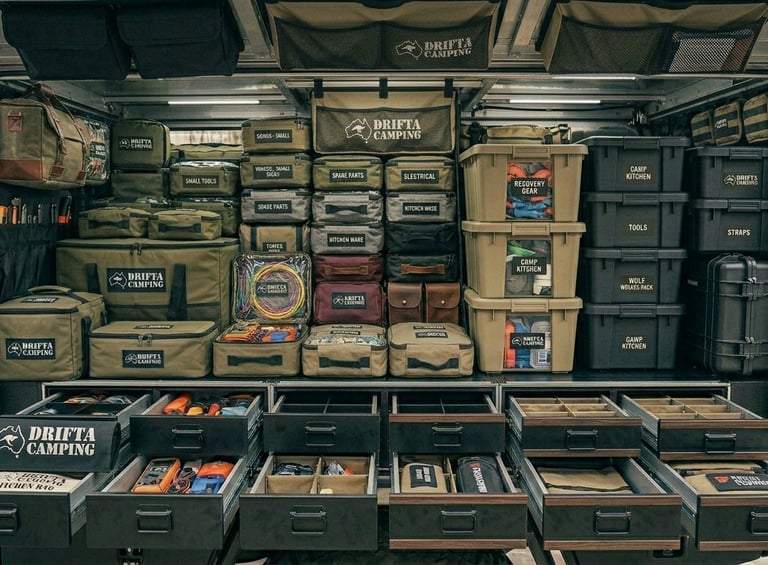
One such company is Drifta Camping & 4WD , based in Gloucester NSW, manufacture custom drawer systems for vehicles.
These fully custom, locally made drawer systems utilise a slide system that is made up of two strips of Teflon on the underside of the drawer as opposed to traditional roller bearings. The advantages of this system are -
1) there's no ball bearings to clog up with grit and grime and - 2) by not having sliders on the sides of the drawers, like with other brands, you maximise the full internal width of your drawers giving you the most storage capacity possible whilst providing a very easy to operate glide in and out
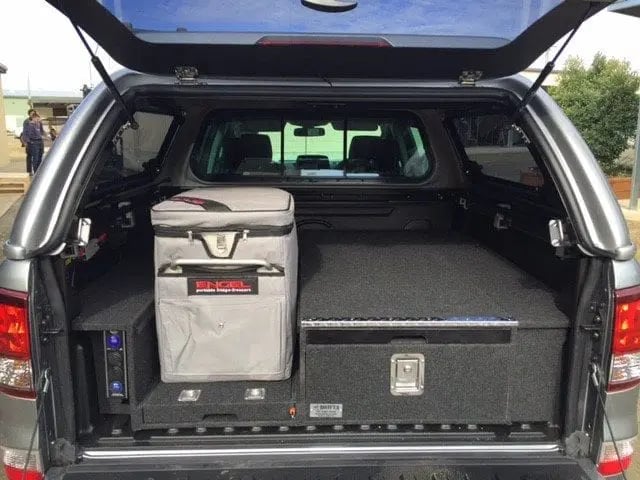
They can also add additional and sometimes considerable weight to the vehicle which is weight you're constantly carrying around, in a similar way to the ever popular roof top tents.
Many drawer systems utilise ball bearing runners which work great initially however they can foul up over time so you need to keep an eye on them and do a little maintenance from time to time as dust and debris can get into the ball bearings causing friction and affect their ease of operation. If you liberally coat them in a lubricant spray or grease, that helps however if you regularly beach camp, grease and sand ... think a cinnamon donut ! So be aware of this.
Drawers:
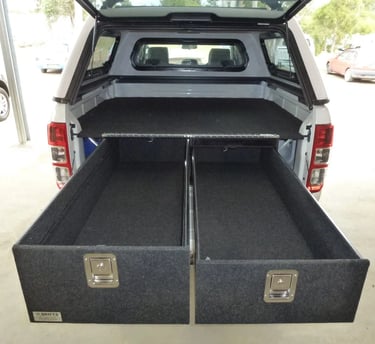
On the other hand, some people may opt for a full drawer set up in the back of their vehicle.
These are equally at home in both ute tubs ( usually requiring a canopy over them ) and station wagons like Patrol's, Land Cruiser's and the like.
Drawer systems are a popular option for many touring vehicles, providing a secure and organised storage solution for tools, recovery gear, cooking equipment and camping essentials. Most systems are bolted into existing mounting points in the cargo area, creating a strong and reliable long-term storage setup. Now whilst they provide plenty of room for an awesome "plug 'n' play solution, like everything in life, they too have their pros and cons.
Some of the downside is that once installed, they're not something you can quickly remove if you suddenly need the full cargo area for a house move, hardware store run or weekend project.
So you have to keep this in mind when planning your storage set up.
Now whether you decide on a full drawer system or simply tote style big plastic storage boxes, one of the biggest mistakes people make is carrying too much gear "just in case". Not only does this take up valuable space, but it also adds unnecessary weight to your vehicle. A well-organised setup allows you to carry what you need, access it easily and spend more time enjoying your trip rather than digging through piles of equipment looking for that one item that's somehow ended up at the bottom. I've found over our many years of camping that the easier it is to camp, the more you'll want to do it. So make it as simple as possible for your requirements, wants and needs.
No matter what vehicle you drive, smart storage solutions can help make every camping and touring adventure safer, more enjoyable and far less stressful.
And remember that's what we're all about ... #stresslesscampmore !
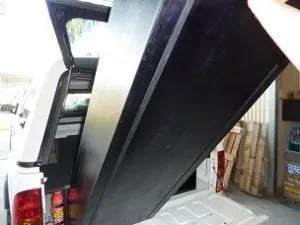
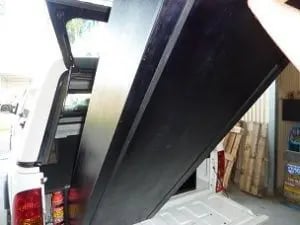
functionality. It's surprising how much the bearing slides can actually chew into your storage space.
Storage tubs :
Most tubs are relatively sturdy and unless you really throw them around without care, you should get plenty of trips out of them. We've had one or two break over the years however that was more human error than "tub error".
Whether you chose drawers or tubs ...
add some bags !
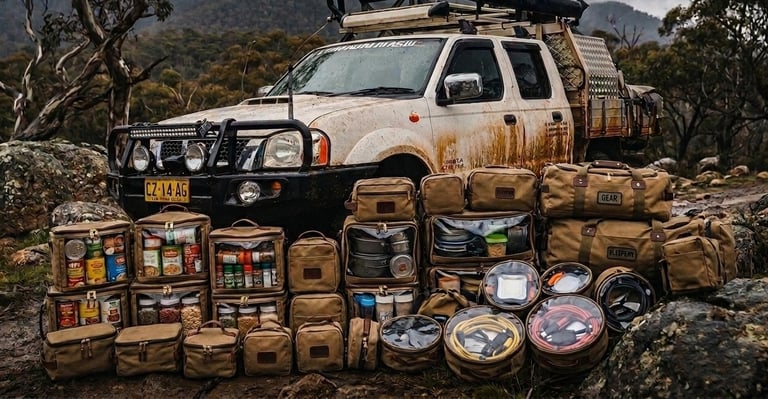
Canvas storage bags have also become incredibly popular amongst campers and tourers.
Available in a wide range of sizes, they're ideal for storing recovery gear, cooking equipment, air compressors, power leads, camp lighting and countless other accessories. Many feature clear tops or windows, allowing you to quickly identify what's inside without having to open every bag in the vehicle.
Unlike permanent storage solutions, canvas bags offer excellent flexibility. They can be moved between vehicles, stacked neatly in the cargo area, packed into a trailer or removed entirely when not required. They also help keep loose items contained and protected from dust and damage.
For many people, a collection of well-labelled storage bags provides the perfect balance between organisation, affordability and versatility.
There are so many canvas bags on the market now that it can be confusing. Whilst many of the shelf products may suit, you could possibly have to try to fit them into the space you have which isn't always ideal. Being that the vast majority are imported by the container load, it's often one size fits all and you may not find the ideal bag to exactly suit your application.
If not, there are local companies that can manufacture custom bags, right here in Australia, to any size or requirement.
The advantage here is you can provide your measurements and they can make what you need when you neeed it. No waiting for contianers to come in and no minimum order quantity either.
Companies like Drifta, Crazy Dog Canvas, Underkover and AOS Swags & Bags can make up virtually anything you need. Now while these bags may be slightly more expensive than off the shelf imported products, you can get the exact size you need with a quality that is second to none.
Check out their websites should you need some custom sized bags.
These storage tubs can be picked up cost effectively from most hardware's, Kmart, The Reject Shop or dedicated storage businesses in a variety of sizes and styles.
What about roof racks ?...


How Much Weight Can You Carry Safely ? - roof rack weights explained ...
Your Vehicle Has a Roof Load Limit
Every vehicle has a maximum roof load limit set by the manufacturer. This is the maximum amount of weight the roof is designed to safely support while you're driving.
One of the biggest mistakes people make is assuming this figure refers only to the gear they're carrying. It doesn't.
Your vehicle's roof load limit includes everything mounted on the roof, including :
roof rack cross bars
roof baskets
roof platforms
awnings attached to the roof rack
recovery boards
spare wheels
jerry cans
storage boxes
rooftop tents
solar panels
and any other accessories or camping gear
Roof racks and roof platforms are fantastic for carrying bulky camping gear, recovery equipment and even rooftop tents, but they're also one of the most misunderstood accessories fitted to 4WDs. Every year, countless vehicles travel Australia's roads with overloaded roof racks simply because the owners didn't understand how roof load limits actually work.
The good news is it's easy to stay safe once you know what to look for.
Your Roof Rack Also Has a Load Rating
Roof rack manufacturers also specify a safe working load limit for their products.
However, this rating does not override your vehicle's roof load limit. You must always comply with whichever rating is lower.
For example :
vehicle roof load limit : 100 kg
roof platform weight : 30 kg
roof rack manufacturer's rating : 200 kg
Although the roof rack itself may be capable of carrying 200 kg, your vehicle can only safely support 100 kg in total.
So after subtracting the 30 kg roof platform from your roof load limit, you're left with only 70 kg of available carrying capacity ... not the 200 kg limit of your roof rack. This is where many people get into weight strife.
This is why simply buying a heavy-duty roof rack doesn't automatically increase how much weight your vehicle can legally or safely carry.
Static vs Dynamic Roof Rack Load Ratings
Another area that causes plenty of confusion is the difference between static and dynamic load ratings. What are ?
Dynamic Load Rating
A dynamic load rating is the maximum weight your roof can safely carry while the vehicle is moving.
This is the figure that matters when you're driving at highway speeds, travelling rough tracks,
braking heavily or negotiating corners.
Vehicles can become quite top heavy too when loaded up high. This is something to factor in when your
crawling off camber tracks as your centre of gravity changes proportionately to the increased weight.
The forces acting on the roof are far greater than the weight sitting there while parked.
The vehicle's roof load limit will almost always be the limiting factor, and that limit includes the weight of the roof rack itself.
Be sure to spend a few minutes checking the numbers before you load up. It's a simple step that can make your vehicle safer to drive, keep you within the law, and help avoid expensive damage or insurance headaches further down the track.


Why Roof Rack Weight Matters
Overloading your roof isn't just about damaging the roof or roof rack.
Extra weight mounted high on a vehicle raises its centre of gravity, reducing stability and increasing body roll. Your vehicle may take longer to stop, handle differently during emergency manoeuvres and become more susceptible to rollovers on uneven terrain.
An overloaded roof rack can also place excessive stress on mounting points, roof gutters and roof structures that were never designed to carry that much weight.
Could Insurance Reject Your Claim ?
Potentially, yes.
If your roof rack or vehicle is found to be overloaded following an accident, you may be considered to have been operating the vehicle outside the manufacturer's specifications. Depending on the circumstances and the terms of your policy, this could affect an insurance claim.
More importantly, an overloaded roof creates unnecessary danger and risk for you, your passengers and everyone else sharing the road.
Roof Rack Loading Tips
Before every trip :
Know your vehicle's maximum roof load limit.
Check your roof rack's dynamic load rating.
Include the weight of the roof rack, platform or basket in your calculations.
Add up the weight of every item you intend to carry.
Never exceed the lower of the vehicle or roof rack manufacturer's ratings.
Keep heavy items lower in the vehicle wherever possible to improve handling and stability.
The Bottom Line ...
A quality roof rack doesn't automatically increase your vehicle's roof carrying capacity.


Static Load Rating
A static load rating refers to the amount of weight the roof rack can support while the vehicle is stationary.
Because the vehicle isn't moving, the roof rack can generally support much more weight. This higher rating is what allows rooftop tents to safely hold the tent itself along with the people sleeping inside it.
Unfortunately, some roof rack manufacturers prominently advertise the much higher static load rating because it looks more impressive. While it's technically correct, it can easily mislead buyers who mistake it for the weight they can carry while driving.
When loading your roof rack, always check the dynamic load rating, not just the static rating.
remember folks ...
research it and always lean on the side of safety
just because you can take it away with you ...
... doesn't mean you have to !


OUR ADDRESS
wherever my adventure takes me
CONTACT US
WORKING HOURS
always
MENU


scan QR to SUBSCRIBE