
communications
OPTIONS
UHF radio is one of the most valuable pieces of communication equipment you can carry when touring, four-wheel driving or camping.
While many people rely heavily on their mobile phone every day, it's easy to forget just how quickly coverage disappears once you venture away from Australia's major population centres. Whether you're heading into the High Country, crossing the Simpson Desert, exploring Cape York or simply enjoying a weekend in a national park, reliable communication can make your trip safer, more enjoyable and far less stressful.
Australia has a land mass of approximately 7.68 million square kilometres, yet even our largest mobile networks only cover a fraction of that area.
Whilst some phone providers promote or boast "covering more than 90% of the population", that's due to the density of population in larger city areas. However travel out of the city and it becomes a very different story.
Within Australia, Telstra's mobile network reaches just over 2 million square kilometres, while Optus and Vodafone each cover around 1.2 million square kilometres. Although these networks service the vast majority of Australia's population, due to many people living in densely populated cities, it leaves enormous areas of remote Australia without mobile reception. Once you leave the cities and major highways, there is a very real chance your mobile phone will simply become an expensive camera.
This is where UHF communication becomes incredibly valuable.
A quality UHF radio allows instant vehicle-to-vehicle communication without relying on any mobile phone towers or subscriptions. They're perfect for convoy travel, allowing every vehicle to communicate on the same channel simultaneously. Instead of trying to ring or text individual vehicles whenever conditions change, everyone hears the same information at exactly the same time.
That means the lead vehicle can quickly warn others about :
deep washouts
oncoming traffic on narrow tracks
livestock or wildlife on the road
fallen trees or other obstacles
dust reducing visibility
water crossings
changes in direction at intersections
fuel or comfort stops
Not only does this make travelling smoother, but it also significantly improves safety by keeping the entire convoy informed.
Car mounted or Handheld - Which is Best ?
Handheld UHF Radios – Portable Communication Wherever You Go
While fixed UHF radios dominate the touring scene, handheld UHF radios have become incredibly popular thanks to their versatility, portability and ease of use. They offer many of the same communication benefits without requiring permanent installation, making them an excellent option for occasional adventurers, company vehicles or anyone wanting a radio they can take anywhere.
There is a flurry of radio brands and models on the Australian market in both car mounted and hand held variants so which one is best for you ?
Well like with all vehicle accessory, that all comes down to which suits you best. I've listed both car mounted and handheld below to hopefully help you choose which is best for your budget and your vehicle.
Most modern fixed radios also include features such as :
large, easy-to-read displays
noise-cancelling microphones
scan functions
programmable memory channels
weather-resistant remote speaker microphones
bluetooth connectivity (on some premium models)
digital signal processing for clearer audio
For anyone who regularly tows a caravan, camper trailer or boat, a fixed UHF quickly becomes an indispensable piece of equipment. It allows easy communication when reversing into campsites, receiving instructions from a spotter or coordinating movements with fellow travellers.
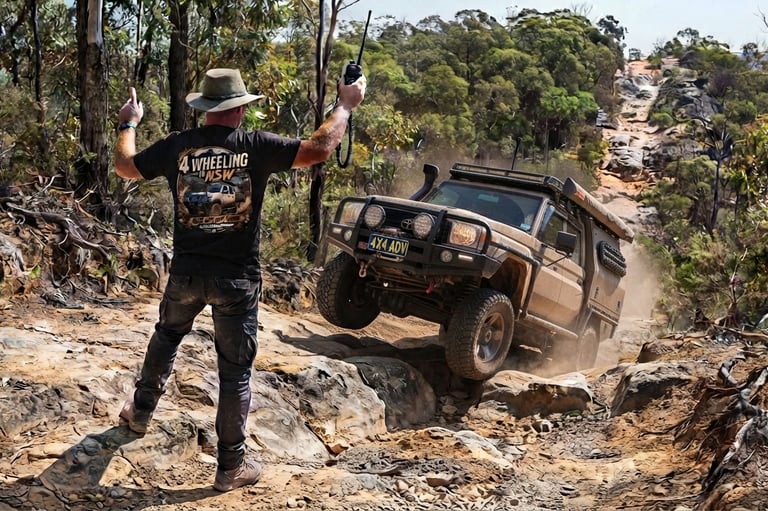

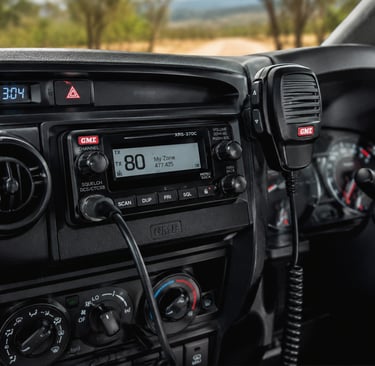
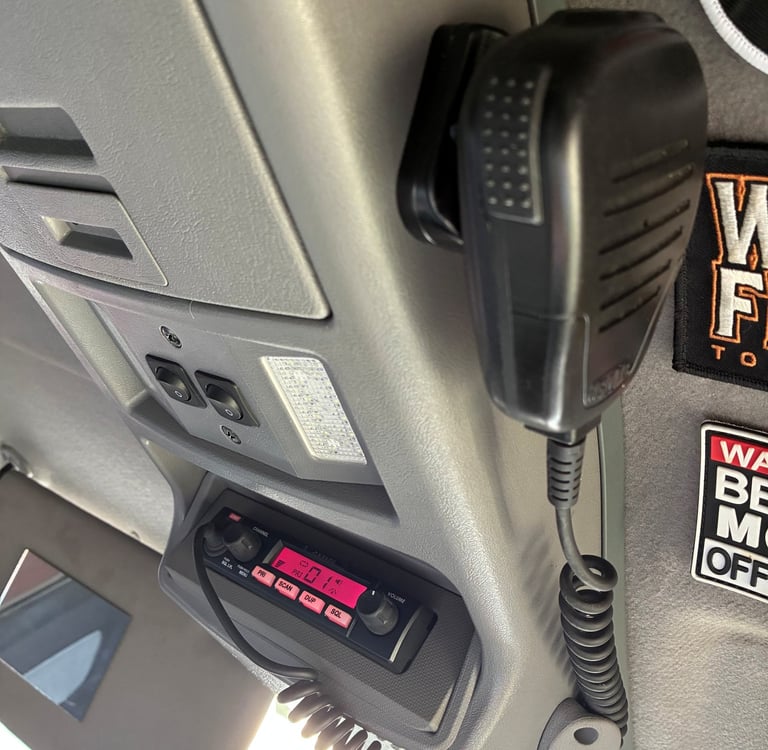
Unlike mobile phones, UHF radios don't rely on mobile towers or internet coverage. They provide instant vehicle-to-vehicle communication at the push of a button, making them ideal for warning others about oncoming traffic, difficult obstacles, changing track conditions, wildlife, water crossings or planned stops.
Everyone travelling in the convoy can monitor the same channel, ensuring important information is heard by every vehicle simultaneously rather than relying on individual phone calls or text messages.
Antenna selection is equally important, with different gain antennas performing better depending on the terrain. Lower-gain antennas typically work better in mountainous or heavily forested country, while higher-gain antennas excel across flat, open landscapes where maximum distance is required.
One of the biggest advantages of a fixed UHF is its higher transmit power and superior antenna system. In Australia, all CB UHF radios are limited to a maximum transmit power of 5 watts, but a quality vehicle-mounted antenna—particularly one mounted high on a bull bar, roof rack or
elevated bracket—generally provides noticeably better range than the small antenna fitted to a handheld radio.
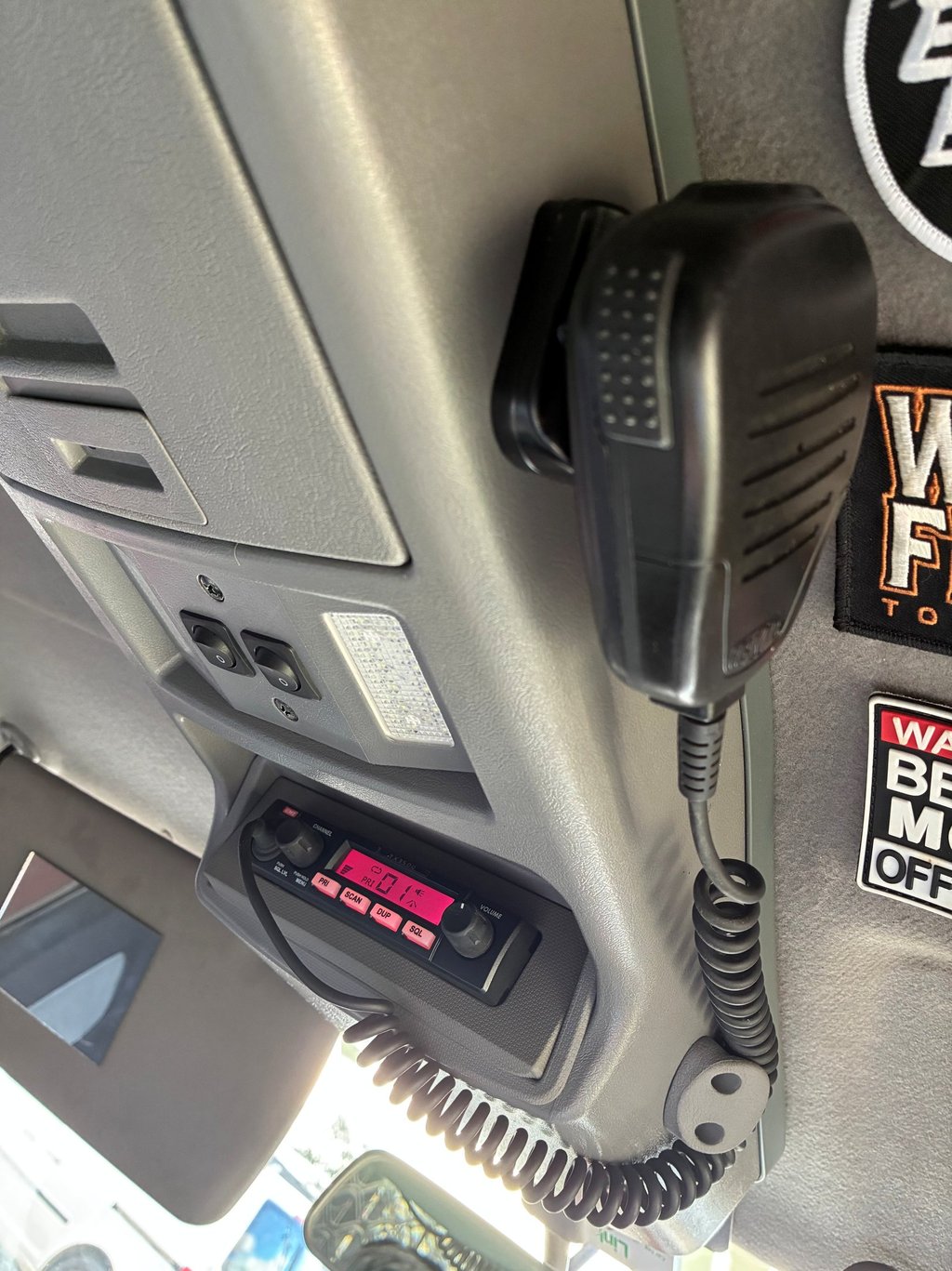
I guess one disadvantage to a fixed / mounted UHF radio is you need somewhere within your dashboard or vehicle to mount it. I have installed a roof console which not only holds my radio and microphone is place but also gives me better than standard lighting and some extra storage for sunglasses, maps and incidentals etc.
Fixed UHF Radios – The Backbone of Reliable Vehicle Communication
A fixed-mount UHF radio is widely regarded as one of the best communication upgrades you can install in a four-wheel drive. Permanently mounted inside your vehicle and connected to an external antenna, they provide significantly better range and clarity than most handheld units, making them the preferred choice for regular touring, remote travel and convoy driving.
❌Cons
generally shorter communication range than a fixed radio due to the smaller antenna.
requires regular battery replacement or recharging.
smaller speaker can be harder to hear in a noisy vehicle.
easier to misplace or accidentally leave behind.
may require an external antenna to achieve maximum performance from inside a vehicle.
✅Pros
no installation required.
portable and lightweight.
can be used inside or outside the vehicle.
ideal for spotting, reversing and campsite communication.
great for families with children around camp.
easy to transfer between multiple vehicles.
usually less expensive than installing a fixed radio.
excellent backup communication device.
Summary ...
A handheld UHF radio is a versatile and affordable communication tool that's perfect for camping, touring and four-wheel driving. Its portability allows you to stay connected both inside and outside the vehicle, making it ideal for spotting on difficult tracks, reversing caravans, communicating around camp or keeping in touch with the kids while they explore. Although it may have some limitations compared to a fixed in-vehicle UHF, a quality handheld is an excellent option for occasional adventurers, company vehicles or as a backup radio.
They're also fantastic for families. Many parents carry a pair of handheld radios so children can safely ride bikes, visit nearby campsites or explore within agreed boundaries while remaining in contact. Rather than relying on mobile phones—which may not have reception or may not be suitable for younger children—a simple radio call provides instant communication and peace of mind.
If you drive a leased vehicle or company car and don't want to install a permanent UHF, a handheld offers a practical alternative. Many premium handhelds can even be connected to an external magnetic antenna while inside the vehicle, greatly improving their performance during travel before disconnecting and taking them with you on foot.
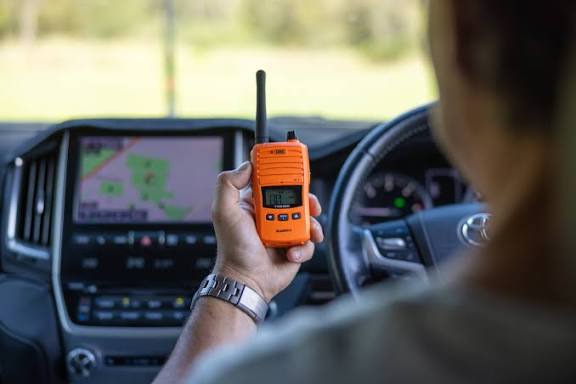
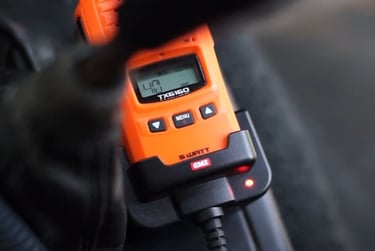
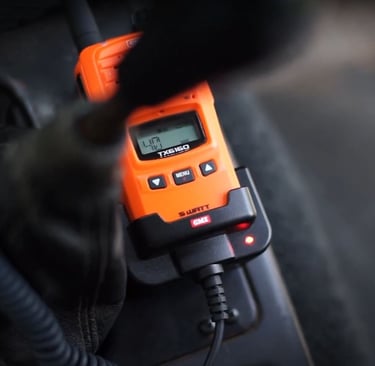
Battery technology has improved dramatically in recent years, with many handheld radios now featuring rechargeable lithium-ion batteries capable of lasting an entire weekend of casual use.
Some models even include USB-C charging, vehicle charging docks and weather-resistant construction.
A handheld UHF radio shouldn't necessarily be viewed as a replacement for a fixed unit—many experienced travellers carry both. A fixed radio provides the best performance while driving, while a handheld offers unmatched flexibility once you step outside the vehicle.
Together, they create a communication setup that's capable of handling almost any touring, camping or four-wheel driving situation Australia can throw at you.
✅Pros
Excellent transmission and reception range
Superior audio quality and louder speaker
External antenna provides maximum communication range
Permanently powered by the vehicle—no batteries to charge
Ideal for convoy travel and remote touring
Quick, one-touch communication via the microphone
Robust and built for years of reliable use
Large display and easy-to-use controls while driving
❌Cons
Higher purchase price than handheld units.
Installation can be time-consuming.
May require drilling or mounting brackets.
Cannot be removed and used away from the vehicle.
Not easily transferred between vehicles.
Less suitable for leased or company vehicles.
Requires a permanently mounted antenna.
Professional installation may add to the overall cost.
A handheld radio is essentially a fully self-contained UHF unit, with the radio, antenna, speaker and rechargeable battery all built into one compact device. Simply charge it, switch it on and you're ready to communicate.
Their biggest advantage is flexibility.
Unlike a fixed radio that stays inside the vehicle, a handheld can go wherever you do. They're perfect for guiding another driver through difficult terrain, spotting wheel placement on technical obstacles, reversing caravans or trailers, launching boats, walking ahead to inspect river crossings or simply chatting around the campground.
Summary ...
For regular four-wheel drivers, caravan owners and remote-area travellers, a fixed-mount UHF radio remains the gold standard for reliable vehicle communication. When paired with a quality antenna suited to the terrain, it delivers outstanding range, crystal-clear audio and dependable performance wherever your adventures take you. If you spend a lot of time exploring Australia's back roads, it's one of the smartest safety upgrades you can install in your vehicle
So if you can't have or don't need a permanent fixed communication solution and can live with some minor disadvantages', a handheld may be just the radio for you and your rig.
If you're only going to own one UHF radio :
occasional camper or weekend 4WDer? → A quality handheld is a fantastic starting point.
regular tourer, remote traveller or caravan owner? → Invest in a fixed in-vehicle UHF with a quality antenna.
best of both worlds? → Carry both. Many seasoned Australian travellers do, using the fixed radio while driving and the handheld for spotting, campsite communication and as a backup if they ever need to leave the vehicle.
That combination gives you the greatest flexibility, convenience and peace of mind wherever your adventures take you.
If you're considering purchasing a quality UHF radio, the Australian-made range from GME is well worth a look. They offer models to suit everything from occasional camping trips to serious outback touring, with a variety of power outputs and features available.
You can explore their handheld UHF range here : https://www.gme.net.au/au/uhf-cb-handheld-range/
When choosing a handheld radio, it's worth investing in a reputable brand that offers good build quality, long battery life and reliable performance. Australian manufacturer GME produces an excellent range of handheld UHF radios with different power outputs and features to suit everyone from occasional campers through to serious remote-area travellers. Their radios have earned an excellent reputation for durability and performance in Australian conditions.
While UHF radios are an outstanding communication tool, it's important to understand their limitations. Unlike a mobile phone or satellite device, a UHF radio only communicates with other nearby radios operating on the same frequency. Depending on terrain, antenna quality and power output, typical communication distances can range from a few kilometres in heavily forested or mountainous country to more than 20 kilometres across flat, open terrain.
For genuine emergency communication in remote Australia, many travellers are now carrying a Starlink satellite internet system. Starlink provides internet access virtually anywhere with a clear view of the sky, allowing voice and video calls, messaging, weather updates, navigation downloads and emergency communication even in areas with no mobile reception. While it requires power and a subscription, it has rapidly become one of the most popular communication solutions for long-distance travellers.
Another option is a satellite phone, which allows direct voice communication via satellite regardless of mobile coverage. These have traditionally been the gold standard for remote-area travel but can be expensive to purchase and often require an ongoing monthly plan, making them less attractive for occasional adventurers.
No matter what communication equipment you carry, every remote traveller should also have a Personal Locator Beacon (PLB) or Emergency Position Indicating Radio Beacon (EPIRB). These devices are designed purely for life-threatening emergencies. When activated, they transmit your location via international satellite rescue networks, allowing emergency services to begin a search and rescue operation even if every other communication method has failed.
Because activating a PLB or EPIRB initiates a potentially expensive and resource-intensive rescue response, they should only ever be used when there is an immediate threat to life or serious injury. They are not a substitute for a UHF radio, satellite phone or Starlink, nor should they be used simply because you've become lost or suffered a minor mechanical breakdown.


One final tip: regardless of the radio you choose, take the time to learn the standard UHF channels and always use them correctly. Keeping emergency and designated channels clear, using appropriate convoy channels and following good radio etiquette helps ensure everyone can communicate safely and effectively when it matters most.
Be sure to download our Australian Channel Cheat Sheet, found up near the top of this page.
Finishing Note


Be sure to check what you can legally use with one of our Quick Reference Cheat Chart's, available free of charge for your convenience.
Keep in mind though, not all 80 channels are useable. Some are reserved for emergencies, and others for data.
Print off and throw in your glovebox.
Choosing your radio ...
Communication is Part of Trip Planning
The best communication setup depends on where you're travelling, but for many Australian adventurers, a layered approach provides the greatest peace of mind :
UHF radio for day-to-day communication, convoy travel and around camp.
Starlink or a satellite phone for staying connected when mobile coverage disappears.
PLB or EPIRB as the last line of defence in a genuine life-threatening emergency.
A quality UHF radio won't replace a mobile phone or satellite communicator, but it remains one of the simplest, most reliable and cost-effective pieces of safety equipment you can own. Whether you're guiding a mate over a difficult obstacle, warning your convoy of an oncoming vehicle, keeping in touch with the kids around camp or simply chatting while travelling Australia's incredible back roads, a UHF radio is an investment that pays for itself every time you head off the beaten track.


OUR ADDRESS
wherever my adventure takes me
CONTACT US
WORKING HOURS
always
MENU


scan QR to SUBSCRIBE